Empowering the Next Generation:
Why Pelvic Floor Health and Mindful Movement are Vital for Teen Girls
Kellie Coates
4/15/20265 min read
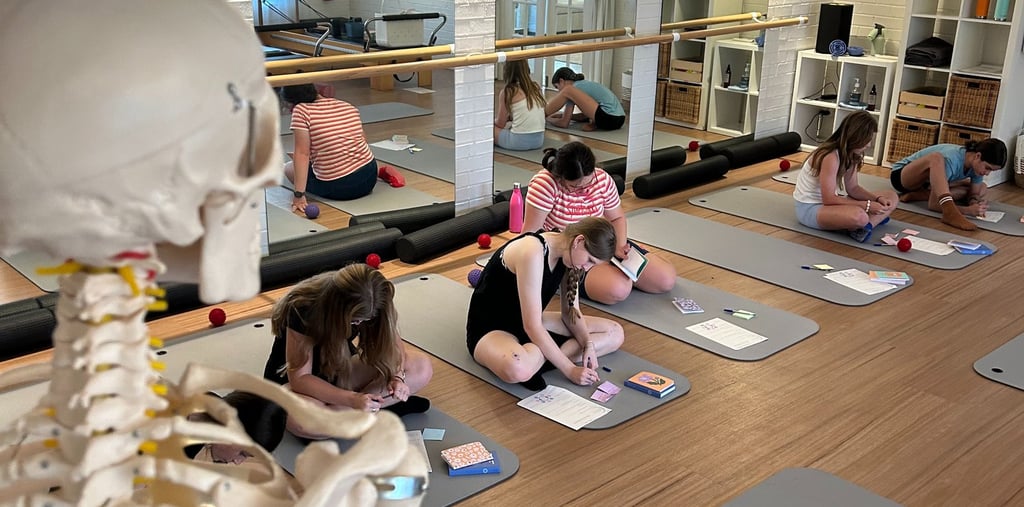
In the whirlwind of adolescence, high school girls navigate a sea of physical, emotional, and hormonal changes. It is a time of self-discovery, yet many young women remain disconnected from one of the most fundamental aspects of their physical health: the pelvic floor. For too long, pelvic health has been relegated to the realms of postpartum recovery or geriatric care. However, the foundation for a lifetime of wellbeing begins much earlier.
By integrating pelvic floor education, the practice of Mat Pilates, and a deep understanding of the "Core Four"—the diaphragm, psoas, transverse abdominals, and pelvic floor—we can empower young women to move with confidence, regulate their nervous systems, and inhabit their bodies with intentionality.
The Missing Link in Health Education: The Pelvic Floor
For many teenage girls, the pelvic floor is a mystery. Often only discussed in hushed tones or avoided entirely, this bowl-shaped group of muscles sits at the base of the pelvis, supporting the pelvic organs (bladder, bowel, and uterus) and playing a critical role in core stability and sexual health.
As highlighted by Women’s Agenda, starting pelvic health education early is not just about preventing future issues; it is about empowerment. When girls understand how their bodies function, they are less likely to accept symptoms like "leaking" during sports or chronic pelvic pain as "normal."
Understanding the pelvic floor is the first step in body literacy. It allows girls to recognise the signs of both hypertonicity (over-tightness) and weakness, both of which can be exacerbated by the high-impact sports or the sedentary "slouching" common in high school environments.
Mat Pilates: A Gateway to Connection
In a world that often demands teen girls look a certain way, Mat Pilates offers a refreshing shift in focus: how the body feels and functions. Unlike high-intensity workouts that may prioritise "burning calories," Pilates is a system of mindful movement that emphasises the connection between the mind, the breath, and the physical form.
For a high schooler, the mat becomes a sanctuary. It is a place where they can slow down and tune into internal sensations—a concept known as interoception. This connection is vital. When a young woman learns to engage her pelvic floor in coordination with her breath, she is not just doing an exercise; she is learning to communicate with her nervous system.
Through controlled, precise movements, Pilates teaches girls that strength is not about brute force, but about stability and balance. This "inner strength" builds a bridge between the mind and body, fostering a sense of agency that carries over into their academic and social lives.
The "Core Four": Beyond the Six-Pack
When we talk about "core strength" in popular culture, the image is usually a flat stomach or "six-pack" abs (the rectus abdominis). However, true functional core strength and spinal alignment come from a deep, internal synergy between four key players:
1. The Diaphragm
The diaphragm is our primary muscle of respiration. It sits like a dome under the ribs. In Pilates, we focus on lateral thoracic breathing, which allows the diaphragm to drop and expand. This movement isn't just for oxygen; it creates a pressure system that works directly with the pelvic floor.
2. The Transverse Abdominis (TvA)
Think of the TvA as the body’s natural corset. It is the deepest layer of abdominal muscle, wrapping around the torso to stabilize the spine. For teen girls lugging heavy backpacks or sitting at desks for six hours a day, a functional TvA is the best defense against chronic back pain.
3. The Psoas
Often called the "muscle of the soul," the psoas connects the upper body to the lower body. It is deeply reactive to stress. When a teen is in a constant state of "fight or flight" (due to exams or social pressure), the psoas tightens. Understanding how to release and engage the psoas helps in maintaining posture and emotional regulation.
4. The Pelvic Floor
The "floor" of the core. As the diaphragm moves down on an inhale, the pelvic floor should gently lengthen and relax. On the exhale, it should naturally lift and engage.
The Ripple Effect: Posture, Regulation, and Lymphatic Drainage
The benefits of understanding this muscular synergy extend far beyond the gym.
Spinal Alignment and Posture: By strengthening the deep core, girls develop a "neutral spine." This prevents the common postural collapses—like the "tech neck" or anterior pelvic tilt—that lead to long-term joint issues.
Self-Regulation: Because the diaphragm and pelvic floor are intimately connected to the vagus nerve, mindful breathing through the core can physically calm the nervous system. Teaching a girl how to use her breath to stabilize her pelvic floor is giving her a tool to manage anxiety in real-time.
Lymphatic Drainage: The movement of the diaphragm acts as a pump for the lymphatic system, which is responsible for clearing toxins and supporting the immune system. Deep, core-centered movement encourages healthy lymph flow, particularly in the pelvic region, which is essential for hormonal health.
A Call to Mothers: The Power of the Conversation
Mothers, you are the primary gatekeepers of health information for your daughters. However, we cannot teach what we do not know. Many women in the current generation of parents were never taught about their own pelvic floors until they experienced a problem—often after childbirth or during menopause.
It is time to break the cycle of silence. As the Australian Government Department of Health notes, pelvic floor muscle training is effective and essential for women of all ages.
If you feel unequipped to have this conversation, upskill yourself. Take a Pilates class, read the latest research, and practice the exercises yourself. When you model a positive, proactive relationship with your own body and pelvic health, you give your daughter permission to do the same. Education is not just about "the talk"; it is about creating a household culture where pelvic health is viewed as a standard pillar of hygiene and self-care, much like brushing one's teeth.
Recent studies, such as those found on PubMed, emphasize that pelvic floor muscle training (PFMT) is not just a "fix" for dysfunction, but a preventative measure that enhances quality of life and athletic performance.
Moving Forward with URISE
We recognise that starting these conversations and finding the right movement practice can be daunting. That is why Big Picture Health has developed the URISE program.
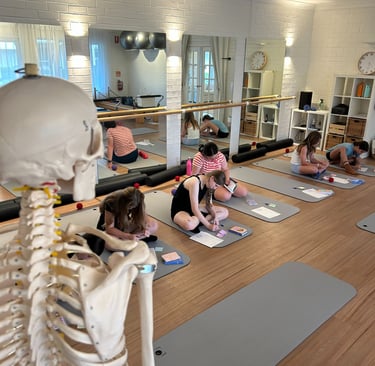
URISE classes are specifically designed for high school girls and women of all ages to bridge the gap between education and true body wisdom. These classes are more than just a workout; they are an educational journey. We combine the principles of Mat Pilates with appropriate anatomy education, focusing on:
Breathwork to manage stress and connect the diaphragm to the pelvic floor.
Core integration to support spinal health and athletic longevity.
Body awareness to build confidence and self-esteem.
The URISE program provides a safe, supportive environment where girls can ask questions, learn about their "Core Four," and develop a movement practice that will serve them for the rest of their lives.
Invest in her future today. To learn more about our upcoming URISE classes or to find resources on how to start the conversation at home, visit us at www.bigpicturehealth.com.au.
Let’s empower the next generation to stand tall, breathe deeply, and move with purpose.